
Foot Binding Part 1: History, Anatomy, and Physical Impact
When I tap into the collective consciousness, I’m given the message that Footbinding is one of the critical topics for Chinese women to be aware of.
This practice is a transgression on the souls and bodies of women for over 1000 years of Chinese history. Source wishes me to include that this practice has created an energetic harm for women and created energetic harm towards the whole Chinese society.
As footbinding has already been abolished, the purpose of this article is not to move you to action. Rather, it is for awareness on all holistic levels, how this practice has impacted you through your ancestry and epigenetics.
Violence is not over when the act is abolished. Violence ends when the current inheritors and victims can name what occurred and produce the conviction to refuse the energetic current to carry on further.
If you are moved or impacted by this article, please share your thoughts in the comments or send me a message through my contact page. Bringing awareness to this deep generational pain is like pulling out a deeply embedded thorn. I expect it to hurt.
I also don’t want everyone walking about with thorns stuck inside them, and so, I am pulling them out through this article.
This topic is Part 1 in a multi-part series on Foot binding.
Basic History
Foot binding is a uniquely Chinese practice that became mainstream in China during the early Song Dynasty (AD 960-1127)²’¹⁰. That’s a little more than 1000 years ago.
It was abolished in the Mainland by the People’s Republic of China in 1949¹. In Taiwan, it was abolished in 1915 by the Japanese colonial government². If you’re a millennial Chinese woman, then you might have an ancestral line of around 40 generations of female ancestors who suffered from foot binding.
Rough estimates point to around 50% of Chinese women being footbound with social class being the main factor³’¹⁰.:
· Upper 50% of wealth: Evidence points to women being footbound as a sign of status.
· Lower 50% of wealth: Women were needed to do manual labor, such as farming for family survival, and were generally not footbound.
Marriageability and Appeasement
The basic implications of this practice are that women who had bound feet were more elegant, cultured, and wealthy. It became a requirement if Chinese women sought a wealthy or “respectable” marriage.
Foot binding being tied into marriageability is a crucial piece to understand on the topic of female disempowerment. Societies that do not allow women to have financial independence (own land or work in their own right) render women dependent on men through marriage just to survive.
The types of standards deemed for a suitable bride open a doorway for women to prostitute their wellbeing, body, and soul in order to obtain a legal union with a man, or as we have connected it, just in order to eat.
What do I mean by this? I mean that because marriage is that critical for survival in this patriarchal context, women feel highly compelled to change who they are in order to cater to men and the patriarchal society². It structures the whole society of women for generations to say :
“I will become whoever you want me to be so that you are happy with me… so you do not discard me”.
We know what this looks like in modern society. Women will go on diets, dress a certain way, get surgeries, or adopt a whole new persona in order to attract a husband. In China (not even ancient China) , that practice of appeasement and debasement is foot binding.
What is Foot Binding?
Foot binding is a practice where mothers break the four toes that are not the big toe and fold those toes under the sole of the foot ¹’³. The broken foot is then bound tightly in cloth so that the foot holds its mutilated shape. This process takes around two years, where repeatedly, the toes are broken and bound, broken and bound.
If you are familiar with my work, then you’ll know I’m a fan of beautiful aesthetics and generally avoid visually gruesome images. If you want to know what a bound foot looks like, please Google it and you will find images.
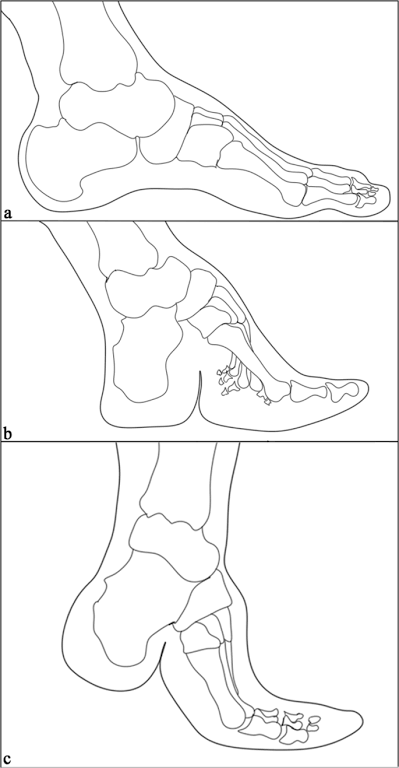
For this article, I am presenting a drawn diagram of the bound feet. This image is from the article Footbinding and non-footbinding Han Chinese females in the Qing Dynasty (1644–1912 CE) Xifengbu cemetery: a skeletal and mortuary analysis.
I want to be very clear that this is physical abuse and body mutilation. I also said earlier that around 50% of Chinese women for 1000 years were footbound. So let’s have that reality sink in. Half of all Chinese women were being physically abused as young girls as early as 5 or 6 years old that resulted in permanent damage and physical disability ¹’³.
This isn’t something that we would condone in our world today. Yet, we need to be aware that most Chinese families aren’t talking about this. And if the act of foot binding is not actively discussed and condemned as wrongful inhumane act done to literal family members, then the malevolent energy of this practice is still being carried forth in the family line in some shape or form, even if it doesn’t manifest as foot binding.
Impacts on Physical Health
I have never broken a bone before, so I can only imagine that it’s very painful. But I do know that most people who break bones in American rush immediately to a hospital, receive medical treatment by a doctor, and get put in a cast so that their broken bone can set properly back into a healthy alignment.
None of that happened for these young girls who went through foot binding. In foot binding, mothers deliberately break their daughter’s foot bones and force them into an unnatural position. Because a young girl’s body is still growing, the mother has to break and bind the feet repeatedly for two years. Half of Chinese girls for 1000 years were tortured in this manner.
How does someone with bound feet walk? They end up having to walk on their heels because their toes, soles, and arch are unavailable to support them in standing, walking, or running⁵’⁹.
Please refer to the image I posted earlier for the structural and skeletal illustrations.
(A) refers to a normal foot where the toes, soles, and arches are all functional and available to help with mobility.
(B) refers to a fully bound foot where the toes, soles, and arches are all folded in.
(C) refers to a half bound foot where a girl did not fully complete the process of foot binding. It’s common to find half-bound feet in foot binding academic studies because the abolitions of foot binding in 1915 and 1949 halted some girls’ foot binding process halfway².
This is what it looks like to walk on your heels.
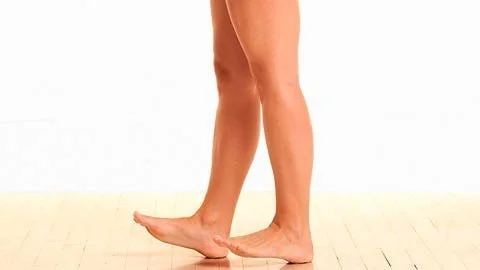
If you try to walk on your heels, you’ll find you can do it for a while, but it’s not sustainable to keep walking on your heels every day. However, this was how our footbound ancestors were forced to walk every day for the rest of their lives.
The problem of walking like this is that the heel is not designed to be the sole point of load absorption for your whole body. Everything that the toes, soles, and arch were designed to do now has to be fulfilled by the heel. And the heel can’t do it all. The heel cannot balance well. It cannot grip the floor. It cannot jump, leap, or dance. All it can do is haphazardly navigate, and with pain ⁵’⁶.
To grasp this magnitude, we have to attempt to imagine what it would be like if as girls, we could not run around or play. If we could not ever do what we wanted. This is a lifetime of being controlled by others.
It renders social norms like Chinese women staying in the home as more than social customs². Chinese women were physically imprisoned in their homes because they could not walk without experiencing excruciating pain⁶.
Osteoporosis and Osteoarthritis
Footbound women suffer from lifetime osteoarthritis and osteoporosis⁶.
Osteoporosis can occur because these women are not using their foot bones daily. If you don’t put load on your bones, your body begins to think you don’t need that bone density.
Osteoarthritis occurs because the cartilage around the heel gets intensely worn away – as it is the only part of the foot taking the whole load of these ladies’ bodies⁹, ¹¹ . In addition, the unnatural position of the bones in a footbound woman creates bone to bone friction which causes immense pain.
How the Foot Binding Process Impacts the Whole Body
In my research, there is a law called Wolff’s Law that keeps coming up as relevant to foot binding⁷. Wolff’s Law essentially states that bones are adaptive and responsive to how much you use them (how much load you place on them) and will build or break down bone material in response to whether the body perceives the bone material is needed based on how you are using your bones.
So physiologically speaking, foot binding is an intense and continuous process of bone remodeling⁷. When we grow as children, Wolff’s law is engaged because our bones are constantly changing to grow taller, longer, and denser. This process requires cells called osteoclasts that get rid of the old bone material and osteoblasts that build the new version of the bone that your body wants to grow into for adulthood.
As we all know, getting proper nutrition is very important for growing children because of this bone growth process. Bone growth or bone remodeling requires new inputs of calcium and phosphorous, protein, Vitamin D, and Vitamin C ¹⁴.
The Resource Allocation Theft
When a young girl undergoes foot binding, her bones are simultaneously trying to grow into adulthood, and also handling constant bone remodeling each time her mom breaks her foot. That is an intensified level of bone remodeling occurring.
The chances are that these young girls weren’t being given a targeted nutritional diet to provide all these nutrients that intensive bone remodeling requires. When the body is in need of executing a cellular process such as bone remodeling and doesn’t have the required nutrients in hand, it will steal resources from the other parts of the body that don’t seem essential ¹⁵.
This is where Wolff’s law comes into play. When a girl isn’t using so many parts of her foot like her toes and lower leg muscles because she isn’t really moving anymore, the body registers that those body parts are lower priority and will steal minerals like calcium and phosphorous from those bones in order to repair and strengthen the heel and ankle bones that now have to shoulder the whole load of the girls’ weight⁹,¹⁵.
So in a nutshell, at a formative time of child development, a footbound girl’s body is breaking itself down instead of building itself up. The body registers that it is under attack, enters survival mode, and begins rationing the other biological resources in the girls’ body.
The Biological Cost
I’ve emphasized the process of repeated foot breaking and binding. This repetition speaks to the fact that bone remodeling becomes a main event for the body. It must constantly attend to the breakdown and reconstruction of the foot bones.
Because the body is so focused on bone remodeling, other parts of the girl’s development will suffer¹². There are not enough resources and energy (ATP) in the body to engage in proper childhood development and constantly fix broken bones⁸. Other areas of development such as brain growth, immune response, and nervous system wellness via compromised myelination are underdeveloped¹³.
On a physiological level, foot binding is hugely counterproductive to a girl’s physical development, not just because it causes her excruciating pain, but also because the process of bone remodeling actively steals or hogs biological resources and energy required to properly develop a girl into a woman¹². She grows up to be less resilient and less biologically adaptable. Thus, it is a severe act of abuse and neglect for Chinese parents to have bound their daughter’s feet.
Please stay tuned for Part 2 and future parts. I am currently unsure what topics will be strictly covered in Part 2, but I plan to cover the Energetic Dynamics of Foot Binding, Epigenetic Impact, Psychological Impact, Economic Impact, and Familial/Cultural Impact.
References & Sources
Encyclopædia Britannica. (2024). Footbinding: Chinese Custom. Encyclopædia Britannica, Inc. Read Online
Conlon, K. (2024). The Rise and Fall of Chanzu: A Short History of Footbinding in Taiwan. Taiwan Insight, School of East Asian Studies, University of Nottingham. Read Online
Foreman, A. (2015). Why Footbinding Persisted in China for a Millennium. Smithsonian Magazine. Read Online
Sun, X., Man, X., Liao, X., Yang, J., Cao, J., Zhu, H., Zhang, Q., & Wang, Q. (2021). Footbinding and non-footbinding Han Chinese females in the Qing Dynasty (1644–1912 CE) Xifengbu cemetery: A skeletal and mortuary analysis. Archaeological and Anthropological Sciences, 13(1), 1–40. Read Online
Reznikov, N., Phillips, C., Cooke, M., Garbout, A., & Stevens, M. M. (2017). Functional Adaptation of the Calcaneus in Historical Foot Binding. Journal of Bone and Mineral Research, 32(9), 1915–1925. Read Online
Cummings, S. R., Ling, X., & Stone, K. (1997). Consequences of foot binding among older women in Beijing, China. American Journal of Public Health, 87(10), 1677–1679. Read Online
Rowe, P., Koller, A., & Sharma, S. (2023). Physiology, Bone Remodeling. StatPearls Publishing / National Center for Biotechnology Information (NCBI). Read Online
Lee, W. C., Guntur, A. R., Long, F., & Rosen, C. J. (2017). Energy metabolism of the osteoblast: Implications for osteoporosis. Endocrine Reviews, 38(3), 255–266. Read Online
Mei, Q., Gu, Y., Kim, J., Xiang, L., Shim, V., & Fernandez, J. (2023). Understanding the form and function in Chinese bound foot from last-generation cases. Frontiers in Physiology, 14, 1217276. Read Online
Lim, L. (2007, March 19). Footbinding: From status symbol to subjugation. NPR. https://www.vpm.org/npr-news/2007-03-19/footbinding-from-status-symbol-to-subjugation
Mayo Clinic. (2023). Osteoarthritis: Symptoms and Causes. Mayo Foundation for Medical Education and Research (MFMER). Read Online
McDade, T. W. (2003). "Life history theory and the immune system: Steps toward a human ecological immunology." Yearbook of Physical Anthropology, 46, 100–125.
Kuzawa, C. W., et al. (2014). "A metabolism of the central nervous system: Growth, development, and energy demands of the human brain." Proceedings of the National Academy of Sciences (PNAS), 111(36), 13010–13015
El Sayed, S. A., & Nezwek, T. A. (2023). Physiology, Bone Growth and Remodeling. StatPearls Publishing / National Center for Biotechnology Information (NCBI). Read Online
Khan, M., & Sharma, S. (2023). Physiology, Parathyroid Hormone. StatPearls Publishing / National Center for Biotechnology Information (NCBI). Read Online
